
Before you go further
- Association budgets, reserves and rules matter as much as the unit.
- Condo insurance splits coverage between you and the association.
- Rental rules can be stricter in a condo building than in town.
On the coast, the choice often comes down to two very different ways of owning: a condo with a view from a balcony, or a house of your own, maybe a few streets back. Both can be wonderful. They differ in how much you pay, how much work you do, how insurance works and how much control you have. Here is a side-by-side look.
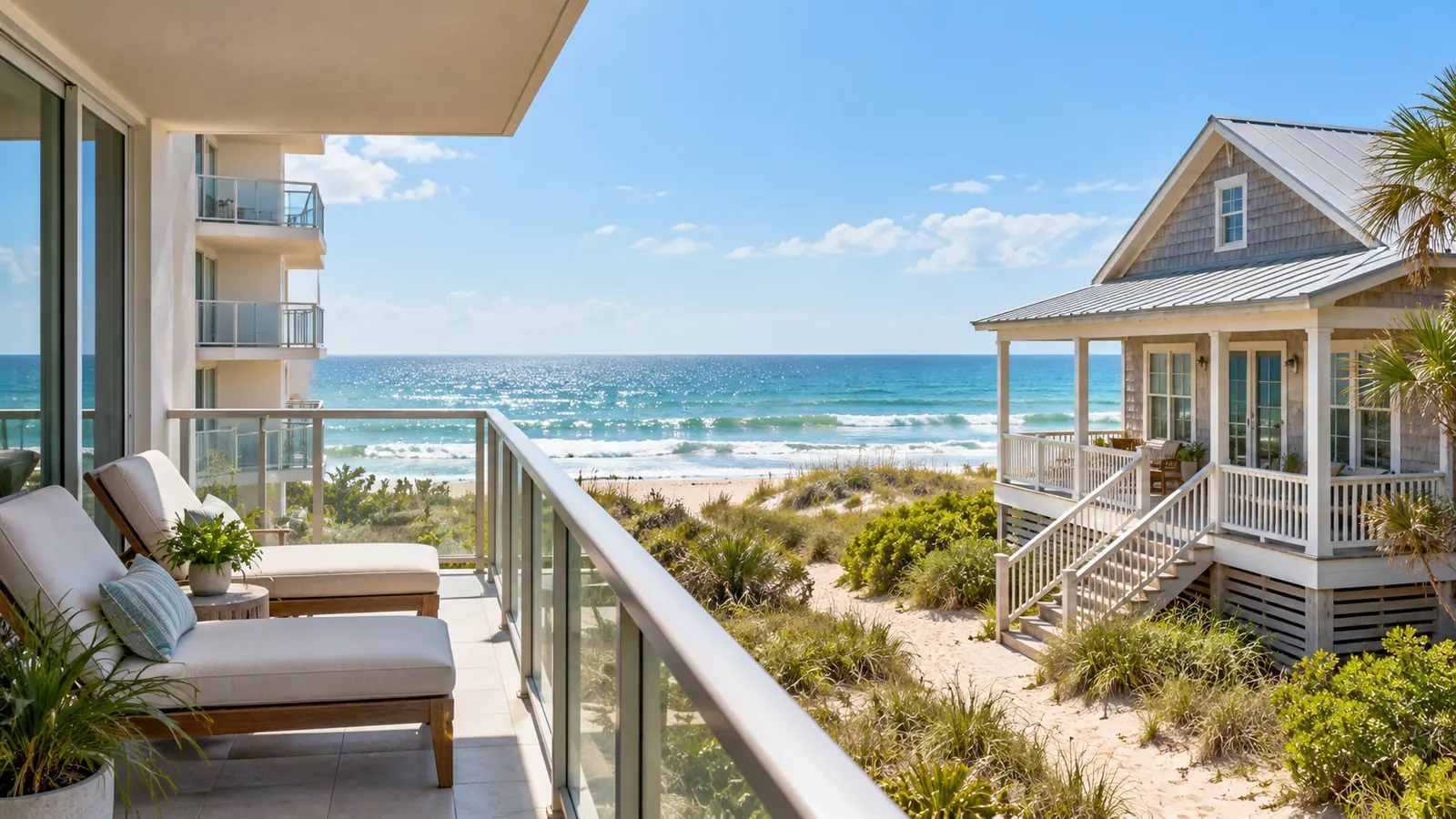
At a glance
| Beach condo | Beach house | |
|---|---|---|
| Upfront price | Often lower for a similar location | Often higher, especially near the water |
| Monthly costs | Association dues on top of mortgage, taxes and insurance | No dues, or lower dues, but you pay all upkeep |
| Maintenance | Association handles the building and grounds | You handle everything |
| Insurance | Split between the association’s master policy and your unit policy | You insure the whole building |
| Rental rules | Set by town and association; can be strict | Set by town and any HOA |
| Control | Shared decisions, votes and rules | Your decisions, within local codes |
| Surprise costs | Special assessments for major projects | Big repairs paid directly |
The case for a condo
A condo can put you closer to the beach for less money, and someone else handles roofs, exterior walls, landscaping and often the pool. For a second home you visit occasionally, that can be a big relief. Many buildings have amenities and on-site management that make renting simpler, if the rules allow it.
The case for a house
A house gives you control: over renovations, over who uses the property and over how much you spend on upkeep. There are no shared decisions and no association that can vote for a large assessment. Houses may also offer more space, parking and outdoor areas. The trade-off is that every repair, from a roof to a piling, is yours to plan for and pay.
Read the association documents
If you are considering a condo, the building is part of what you are buying. Before your offer becomes final, ask for and read:
- The budget and how much the association holds in reserves.
- Recent meeting minutes, which often reveal planned repairs and disputes.
- Any recent or planned special assessments.
- The master insurance policy and what it covers.
- Rules on rentals, pets, parking and renovations.
- Any recent engineering or inspection reports on the building.
Tip: On the coast, ask specifically about the building’s structural inspections and any planned concrete, balcony or roof repairs. These projects can be large and are usually shared by all owners.
Insurance differences
In a condo, the association’s master policy usually covers the building structure and common areas, while your own unit policy covers your interior and belongings and your liability. How much of the interior the master policy covers varies, so read it. Flood insurance can also be split between the building and individual units. For a house, you arrange homeowners, wind and flood coverage yourself. See Insuring a Beach Home: Homeowners, Wind and Flood Coverage.
Rental rules
If renting matters to you, check both the town’s rules and the association’s. Condo associations can set minimum stays or limit rentals even when local law allows them. Houses outside an association are governed mainly by local rules. Our guide to Short-Term Rental Rules for Beach Homes: What to Check Before You Buy goes deeper.
Financing
Lenders look at the building as well as the buyer when financing a condo. Some may ask for information about the association’s finances, insurance and the share of units that are rented. Ask your lender early whether a particular building raises any issues, so you are not surprised late in the process.
Townhomes and the middle ground
Between a condo and a detached house sits a range of options: townhomes, duplexes and homes in small associations that share walkways, a pool or beach access. These can offer some of the independence of a house with some of the shared maintenance of a condo. The details live in the governing documents. Check what the association maintains, whether roofs and exterior walls are your responsibility or shared, how insurance is divided and what the rental rules say. Two properties that look almost identical can split costs very differently.
Questions that usually decide it
- How often will you use the home, and do you want to handle repairs?
- Do you plan to rent, and do the rules allow it?
- Is your budget comfortable with dues and possible assessments?
- How much do you value privacy and control?
- Which option keeps you closest to the beach for the money?
There is no single right answer. A condo suits buyers who want simplicity and location; a house suits those who want control and space. Whichever you choose, the steps in Buying a Beach Home, Step by Step still apply.