
Before you go further
- An elevation certificate records how high a building sits for flood purposes.
- NFIP pricing now looks at flood frequency, storm surge, erosion, distance to water and rebuilding cost.
- A seller can assign their NFIP policy, and its discount, to the buyer.
Two houses on the same beach can carry very different flood insurance bills. Part of the reason is height: how far the living space sits above likely flood water. Part of it is everything else FEMA now weighs when it prices a policy. A buyer who asks the right questions early can see that difference before it is locked into the monthly budget.
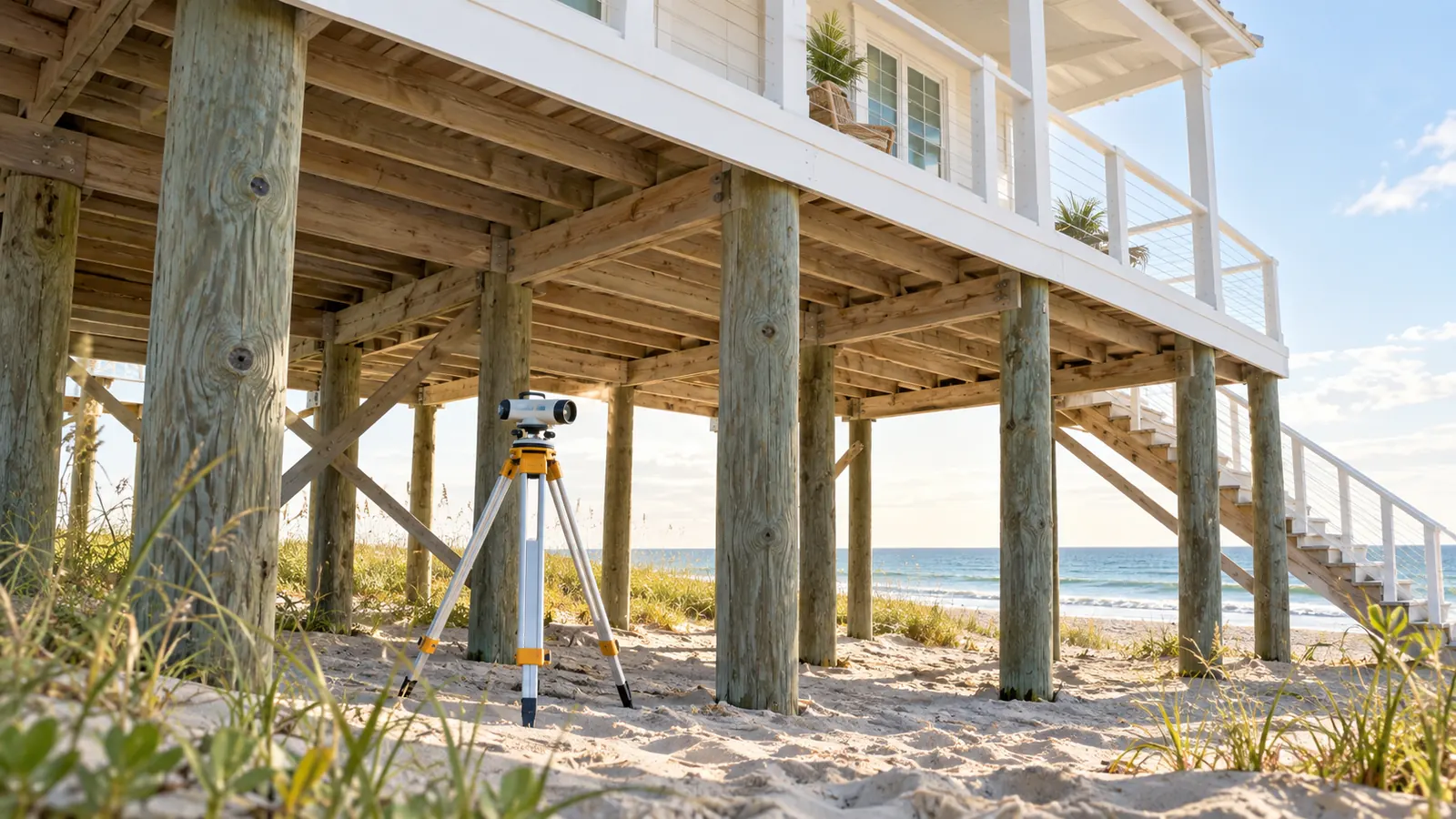
What an elevation certificate is
An elevation certificate is a form that records a building’s elevations for flood purposes. FEMA explains its basic job: a community’s permit file must show that new buildings and substantial improvements in Special Flood Hazard Areas are properly elevated, and FEMA encourages communities to use its own Elevation Certificate because the same form can be used by the owner to obtain flood insurance. Communities in the Community Rating System must use FEMA’s form.
What it measures depends on the zone. In A zones the key figure is the elevation of the lowest floor. In coastal V zones, where storm waves add to the hazard, it is the elevation of the lowest horizontal structural member, the bottom of the beams that hold the house up. It is one reason so many oceanfront homes stand on pilings.
How NFIP prices a policy now
FEMA finished rolling out its current pricing approach, known as Risk Rating 2.0, on April 1, 2023. The older method leaned heavily on a building’s elevation within a zone on the Flood Insurance Rate Map. The current one adds more variables:
- How often flooding happens at the location.
- Several kinds of flooding: river overflow, storm surge, coastal erosion and heavy rainfall.
- Distance to a water source.
- The building’s characteristics, such as its elevation.
- The cost to rebuild the home.
FEMA also notes that the pricing approach does not use flood zones to determine flood risk. The zone still decides whether a lender must require flood insurance, as Flood Zones Explained for Beach Home Buyers explains, but it is no longer the main driver of the price.
Tip: By law, most NFIP rates may not rise more than 18 percent a year. A policy that is below its full-risk price today may climb toward it over several renewals, so ask what the full-risk premium would be, not only this year’s bill.
Taking over the seller’s policy
Here is the detail many buyers miss. FEMA says policyholders can transfer their discount to a new owner by assigning their flood insurance policy when the property changes hands. FEMA still offers premium discounts for pre-FIRM subsidized and newly mapped properties, and an assignment can keep that pricing in place for you instead of starting a fresh policy at a new rate.
Ask early whether the seller has an NFIP policy, what it costs, whether it carries a discount and whether the seller will assign it at closing. Put the request in your offer if it matters. FEMA points buyers to the same agent who sells their home or auto insurance; that agent can explain what an assignment would mean for your premium.
Community discounts
Some towns earn lower flood premiums for everyone. Under FEMA’s Community Rating System, participating communities receive NFIP discounts of 5 to 45 percent based on their class. Because pricing no longer depends on the zone, the discount applies to every policy in the community, inside or outside the high-risk area. When you compare two beach towns, ask whether each takes part and at what class.
Height still matters
Even though the zone no longer sets the price on its own, elevation is still one of the property characteristics FEMA weighs, alongside the cost to rebuild. Two neighbors in the same zone can see different premiums because one house sits higher or would cost less to rebuild. When you compare beach homes, put the elevation information side by side with the insurance quotes rather than judging the houses by their zone letters alone. If a home has been raised or rebuilt, ask for the permits and the updated certificate that go with that work.
Documents to ask for before you offer
- The current elevation certificate, if the seller or the town has one.
- The seller’s flood insurance declarations page: insurer, coverage and premium.
- Any record of past flood claims on the property.
- Permits for elevation work, additions or substantial improvements.
- A quote for your own policy on the address, from an agent who sells NFIP coverage.
Remember the waiting period
A new NFIP policy usually takes 30 days to take effect, though the wait does not apply when you buy coverage in connection with making a loan. Even so, start the conversation with your agent and lender as soon as you are under contract. Our guide to Insuring a Beach Home: Homeowners, Wind and Flood Coverage covers wind coverage, the other half of a coastal insurance budget.