
Before you go further
- A Special Flood Hazard Area has at least a 1% chance of flooding in any given year.
- Zone V adds storm-wave hazard; FEMA puts the chance of flooding over a 30-year mortgage at 26%.
- Regulated lenders require flood insurance in high-risk zones.
Every beach buyer hears about flood zones, but few are told what the letters on the map actually mean. That matters, because the zone affects whether your lender will require flood insurance, how much that insurance is likely to cost and, most importantly, how much risk you are taking on. Here is a plain-language guide.
Where flood zones come from
FEMA publishes Flood Insurance Rate Maps, often called FIRMs, for communities that take part in the National Flood Insurance Program. The maps divide land into zones based on how likely flooding is and what kind of flooding to expect. You can look up any address on FEMA’s online flood map service. Your agent, lender or insurance agent can help you read the result.
The high-risk zones
FEMA’s highest-risk areas are called Special Flood Hazard Areas, or SFHAs. An SFHA is the area expected to be flooded by an event that has a 1 percent chance of being equaled or exceeded in any given year. That event is known as the base flood or, informally, the 100-year flood, which is a misleading name: a 1 percent chance every year adds up over the life of a mortgage.
| Zone letters | What they indicate | Typical setting |
|---|---|---|
| A, AE, AH, AO, A1-A30, A99, AR | High risk: at least a 1% annual chance of flooding | Low-lying land, rivers, bays, back sides of barrier islands |
| V, VE, V1-V30 | High risk plus storm waves | Beachfront and open coast |
| B or X (shaded) | Moderate risk: between the 1% and 0.2% annual chance flood | Areas just outside the high-risk zone |
| C or X (unshaded) | Minimal risk: above the 0.2% annual chance flood level | Higher ground |
Why Zone V deserves special attention
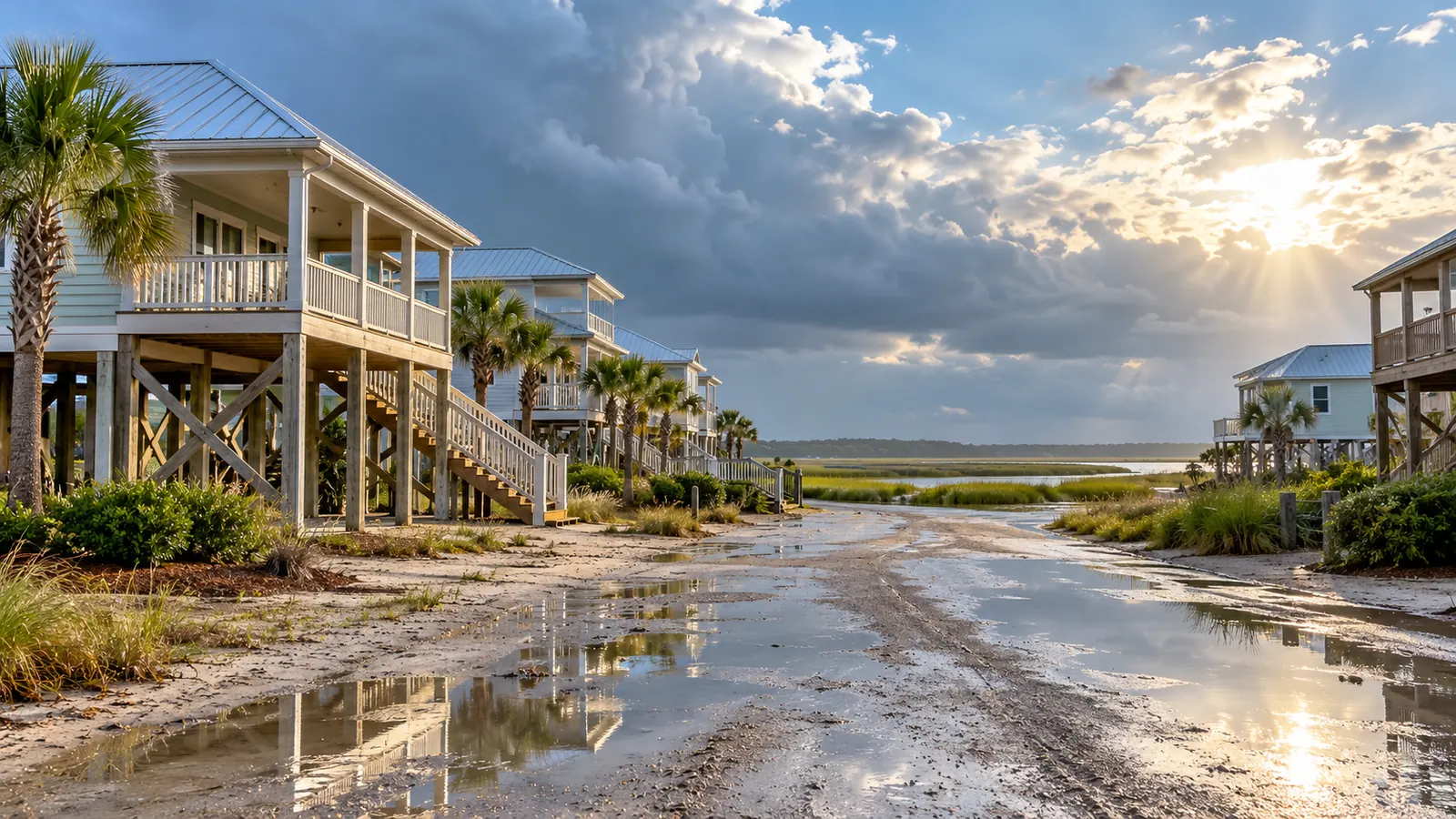
Zone V covers coastal areas with a 1 percent or greater chance of flooding plus an additional hazard from storm waves. FEMA notes that these areas have a 26 percent chance of flooding over the life of a 30-year mortgage. Waves add force, not just water, which is why homes in V zones are often built on pilings and why construction rules and insurance there tend to be stricter. If a beachfront home you like is in a V zone, factor that into both your budget and your expectations.
When flood insurance is required
Federal law directs regulated lenders not to make, increase, extend or renew a loan secured by a building in a Special Flood Hazard Area unless the building is covered by flood insurance for the term of the loan. The required amount is at least the outstanding loan balance or the maximum coverage available for that type of property, whichever is less. Lenders must also accept private flood insurance that meets the requirements. FEMA summarizes it simply: homes in high-risk flood areas with mortgages from government-backed lenders are required to have flood insurance.
Tip: Even outside a high-risk zone, flood insurance is worth pricing. Most homeowners insurance does not cover flood damage, and the coast does not always follow the map.
Elevation and the elevation certificate
Within a zone, the height of the home relative to expected flood levels matters a great deal, both for safety and for insurance pricing. An elevation certificate is a document that records a building’s elevation information. Ask the seller whether one exists, and ask the town too: FEMA notes that a community must keep an official record showing that new buildings and substantial improvements in high-risk areas are properly elevated. Our guide to Elevation Certificates and Flood Insurance Pricing: What Beach Buyers Should Ask For explains what it records. Homes raised well above expected flood levels are generally less exposed than similar homes built lower.
What to ask the seller
- Is the home in a Special Flood Hazard Area, and which zone?
- Is there an elevation certificate?
- What does the current flood insurance policy cost, and can it be transferred?
- Has the home ever flooded or had a flood insurance claim?
- Have any repairs been made after storms?
Disclosure rules vary by state, so not every seller is required to answer every question. But the answers, or a refusal to answer, tell you a lot.
Maps change
Flood maps are revised over time. A revision can move a home into or out of a high-risk zone, which can change whether insurance is required and what it costs. If you hear that new maps are coming for an area, ask your insurance agent how a change might affect the home you are considering.
Putting it together
Check the zone on the map, ask for the elevation certificate and current insurance, and get your own quote before making an offer. A flood zone does not have to rule a home out, but it should be part of the price you are willing to pay. Next: Insuring a Beach Home: Homeowners, Wind and Flood Coverage.